
H1: High Carbon Steel Strip for Woodworking Blades
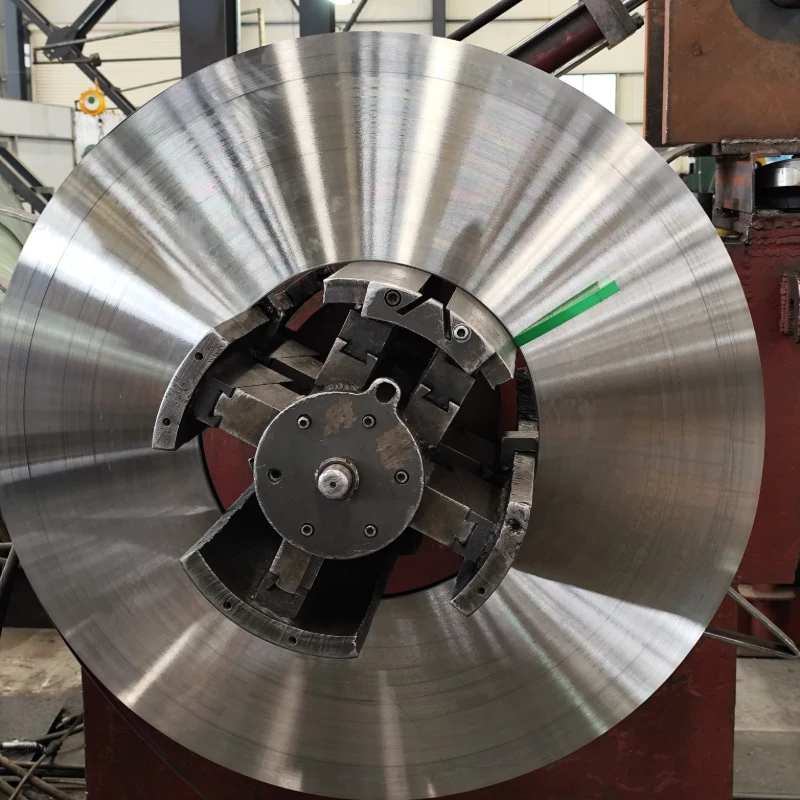
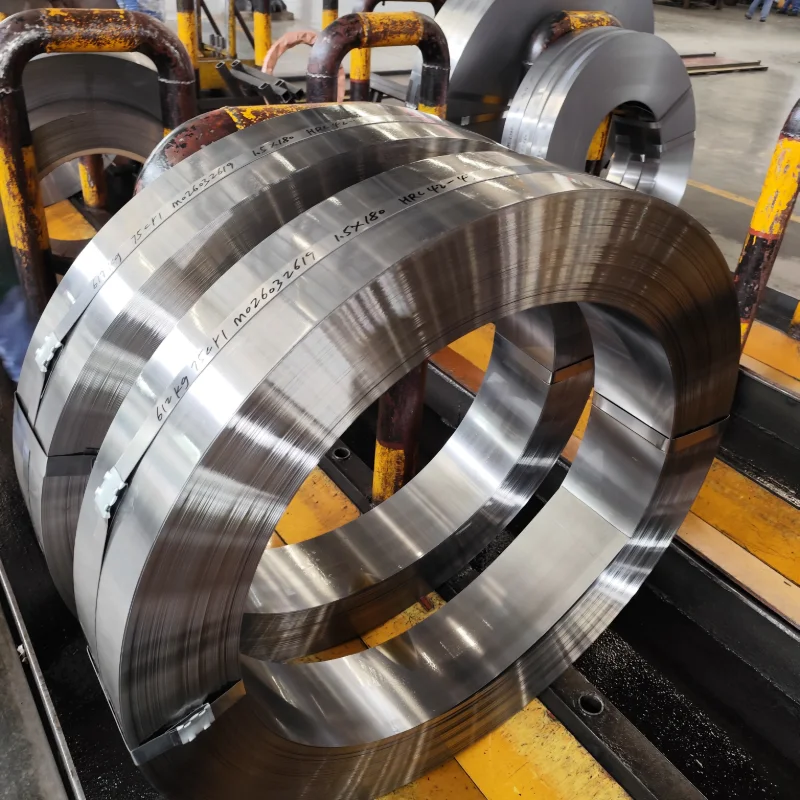
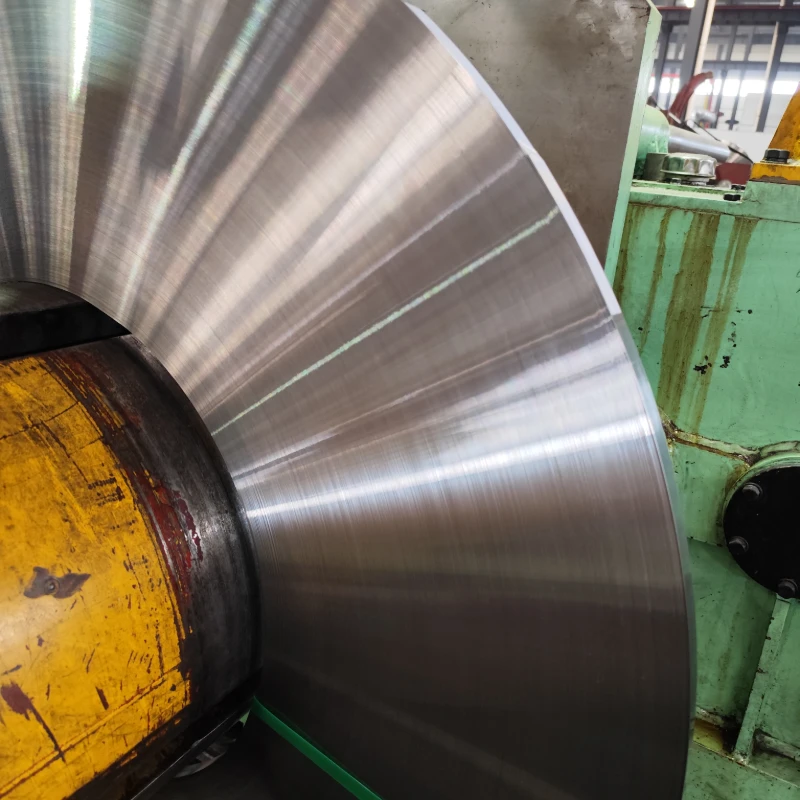
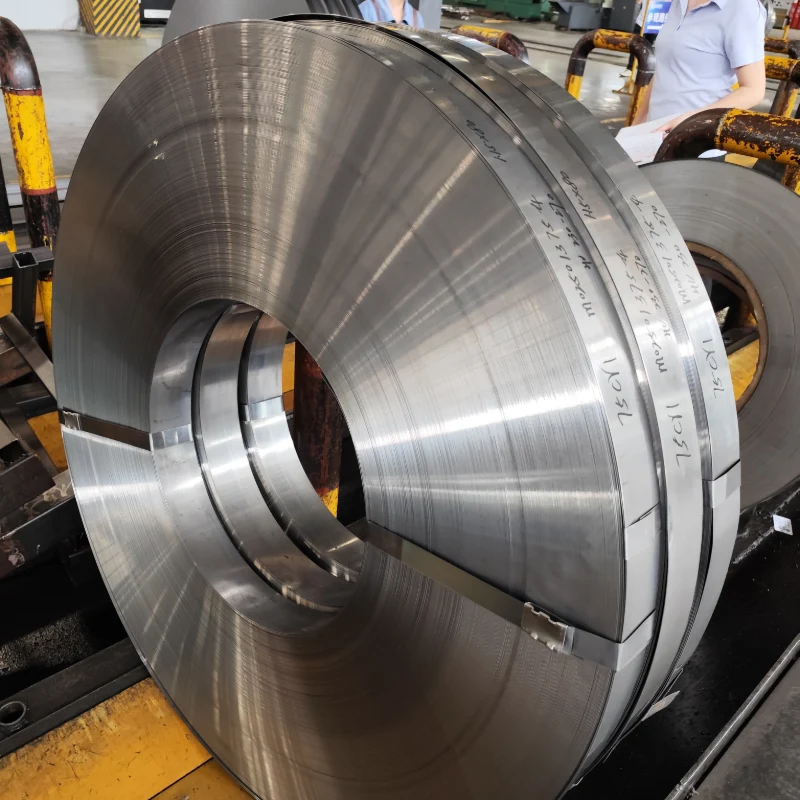
High carbon steel strip for woodworking blades is a precision cold-rolled, hardened-and-tempered carbon steel coil (typically 0.64–0.78% C) supplied in thicknesses from 0.20 mm to 2.5 mm and widths from 10 mm to 300 mm, used as the tooth-bearing body of band saw blades for hardwood, softwood, and engineered wood cutting. The three grades that cover the majority of woodworking band saw production are C67S (versatile, cost-effective), C75S (optimal hardness–toughness balance for narrow blades), and 75Cr1 / C75Cr1 (added chromium for higher hardenability and heavy-duty tooth loading).
H2: What does this steel strip actually do in a woodworking blade?
The strip is the blade body before teeth are cut or swaged. It must hold a hard, wear-resistant edge while surviving continuous flexing over the band saw wheels. That dual demand — edge hardness vs. fatigue toughness — is the central selection problem for blade manufacturers.
After quenching and tempering, woodworking band saw strip is normally supplied in the HRC 40–50 range, with harder grades reaching HRC 44–52 depending on carbon and alloy content. C75S in the hardened-and-tempered condition can reach tensile strength up to approximately 1,700 N/mm², while maintaining enough ductility for coiling and tooth forming.
H2: Which grade should I specify for my blade width?
H3: C67S — for standard, cost-sensitive band saw blades
C67S (0.64–0.70% C) is the workhorse grade for general woodworking band saw blades where the priority is consistent supply and predictable cost. It offers adequate hardness after tempering and is forgiving in tooth-setting operations. It is not the right choice for wide blades with swaged teeth or for operations cutting high-resin hardwoods at aggressive feed rates.
H3: C75S — for narrow blades (≤40 mm) and the best hardness–toughness balance
At approximately 0.75% carbon, C75S is widely regarded as the optimal carbon level for narrow band saw blades. Field experience and supplier data converge on the same point: 0.75% C gives the blade enough carbon to reach HRC 44–50 after tempering without pushing toughness so low that the blade cracks at the wheel radius.
If you produce resaw blades, curve-cutting blades, or general-purpose woodworking band saw blades in the 6 mm to 40 mm width range, C75S is the default specification unless your cutting trials show edge chipping or body breakage.
H3: 75Cr1 / C75Cr1 — when hardenability and tooth strength matter more
The addition of 0.30–0.50% Cr improves hardenability and strength over plain C75S. This matters for wide blades (>40 mm) , blades with swaged teeth, and applications where the tooth root experiences higher bending stress. 75Cr1 is the appropriate upgrade when C75S blades fail by tooth-root cracking or when section hardness uniformity is critical through the blade thickness.
For wide blades produced with swaged teeth, 75Ni8 (1.8–2.2% Ni) is the further step up when breakage at the tooth root or body remains a problem after switching to Cr-bearing grades. The nickel addition increases toughness and hardenability specifically to prevent breakage in wide, heavily loaded blades.
H2: Grade comparison table — carbon content, hardness, and best-fit blade
| Grade | C (%) | Mn (%) | Si (%) | Cr (%) | Typical delivered hardness | Best-fit woodworking blade |
|---|---|---|---|---|---|---|
| C67S | 0.64–0.70 | 0.60–0.90 | 0.17–0.31 | — | HRC 40–48 (Q+T) | Standard narrow/medium band saw blades; cost-driven programs |
| C75S | 0.72–0.78 | 0.60–0.80 | 0.17–0.31 | — | HRC 44–50 (Q+T) | Narrow blades ≤40 mm; optimal hardness–toughness balance |
| 75Cr1 / C75Cr1 | 0.70–0.78 | 0.60–0.80 | 0.17–0.31 | 0.30–0.50 | HRC 44–52 (Q+T) | Wide blades >40 mm; swaged teeth; higher tooth-root strength |
| 75Ni8 | 0.72–0.78 | 0.50–0.80 | 0.15–0.35 | — | Ni 1.8–2.2% | Wide blades with swaged teeth; breakage-critical applications |
| SK5 / SK85 | 0.80–0.90 | 0.15–0.50 | 0.15–0.35 | ≤0.30 | HRC 29–55 (Q+T range) | Utility knife, hand saw, and select woodworking cutting tools; higher hardness ceiling but reduced toughness vs. C75S |
H2: What causes premature blade breakage — and how does strip quality prevent it?
Non-metallic inclusions are a primary cause of premature blade breakage in wood cutting. Inclusions interrupt the continuity of the steel matrix, concentrate stress at the tooth root and body, and initiate cracks under the repeated bending of band saw operation. In 75Cr1 saw steels specifically, inclusions such as MnS and CaS also act as pitting-corrosion initiation sites, compounding fatigue failure.
This is where strip purity becomes a specification, not a marketing phrase. Suppliers targeting woodworking blade customers control:
-
S ≤ 0.008% and P ≤ 0.025% to limit sulfide and phosphorus grain-boundary segregation;
-
Advanced smelting and rolling to reduce oxide inclusion content and size;
-
Uniform tempered martensite through continuous quenching and tempering, with hardness controlled across the full cross-section to prevent decarburization.
H2: Dimensional and delivery specifications buyers should confirm
H3: Thickness, width, and tolerance
Woodworking band saw strip is commonly supplied in:
-
Thickness: 0.20–2.5 mm (some suppliers extend to 5.0 mm for heavier sections);
-
Width: 10–300 mm for band saw blade bodies;
-
Thickness tolerance: ±0.02 mm to ±0.03 mm for precision cold-rolled strip; tighter ranges (down to ±0.015 mm on thinner gauges) are achievable on 4-high reversing mills.
Why it matters: Uneven coil thickness causes poor blade tracking and inconsistent tooth geometry. In band saw applications, thickness variation shows up directly as blade wander and premature tooth strippage — not as a dimensional rejection, which makes it a hidden cost.
H3: Edge condition and surface finish
Available edge conditions include slit edge, both edges rounded, one side round / one side slit, and square edge. For woodworking blades, rounded edges reduce the risk of edge-initiated cracking during coiling and tensioning.
Surface finishes are supplied as bright, blue, yellow, grey-blue, or polished. The blue/yellow temper colors are not cosmetic: they indicate a controlled tempering process and are commonly specified for woodworking saw strip.
H3: Coil weight and flatness
-
Coil weight: commonly 250–600 kg, with 500 kg MOQ for saw-blade coil in export markets;
-
Straightness / flatness: suppliers serving the band saw industry target straightness deviation <3 mm over 5 m and flatness verified under R1–R4 tolerances to ensure stable blade running.
H2: Pricing and MOQ — what should a blade manufacturer budget?
Pricing for high-carbon saw-blade coil is grade-, specification:
-
1075 / C75 high-carbon saw-blade coil has been quoted at US$0.91–2.53/kg at a 500 kg minimum on Made-in-China listings;
-
Heat-treated alloy strip for band saw blades is listed in the US$1,500–1,900 / metric ton range depending on grade and order volume;
-
Lower-volume or custom-slit orders can carry per-meter pricing rather than per-kg pricing, so landed cost per finished blade is the correct comparison metric, not coil price alone.
H2: FAQ — questions procurement engineers and blade manufacturers actually ask
H3: What is the difference between C75S and 75Cr1 for band saw blades?
C75S is a plain high-carbon spring steel at ~0.75% C, giving an excellent hardness–toughness balance for narrow blades. 75Cr1 adds 0.30–0.50% Cr, which increases hardenability and strength — useful for wide blades, swaged teeth, and applications where tooth-root stress is higher. For standard narrow woodworking band saw blades, C75S is the cost-effective default; for >40 mm wide blades or breakage-prone tooth profiles, 75Cr1 is the appropriate upgrade.
H3: What hardness should I specify for woodworking band saw strip?
Most woodworking band saw strip is delivered in the HRC 40–50 range after quenching and tempering. Harder conditions (up to HRC 52 for Cr-bearing grades) improve wear resistance but reduce toughness and sharpenability. The correct hardness depends on blade width and tooth geometry: narrow blades benefit from the lower end; wide swaged-tooth blades can use the higher end with a Cr or Ni-bearing grade.
H3: Why do my blades break before the teeth wear out?
The most common metallurgical cause is non-metallic inclusions — oxides, sulfides, and phosphides that interrupt matrix continuity and concentrate stress under cyclic bending. Low S (≤0.008%) and P (≤0.025%), combined with clean smelting practice, directly reduce this failure mode. The second most common cause is uneven thickness, which produces poor blade tracking and secondary bending stress. If breakage is the dominant failure, specify inclusion-controlled strip before changing hardness or grade.
H3: Can you supply food-grade or food-contact certified strip?
The standard product is an industrial steel strip for tool and saw blade manufacturing. It is not positioned or certified as food-grade unless a specific food-grade certification is separately agreed and documented. If you produce blades for food processing (meat and seafood band saws), that certification must be requested at the quotation stage and verified against the mill certificate.-5
H3: What certifications should accompany a saw-blade strip shipment?
A minimum shipment for blade manufacturing should include mill test certificate (chemical composition, including S and P), hardness and tensile test results, and dimensional inspection records. Suppliers serving the saw industry commonly operate under ISO 9001:2015, and third-party inspection (BV, TUV, SGS) can be arranged for export orders.
H3: How is the strip packaged for export?
Standard sea-worthy packaging for high-carbon saw strip: anti-rust paper + light oil + plastic film wrap, coil-bound, loaded into 20 ft containers. Coil ID is typically 300–500 mm, and eye-to-sky or eye-to-wall orientation is specified per buyer requirement.
H3: What is the typical lead time?
Mill-direct lead time for hardened-and-tempered saw strip is commonly 31–45 days for export orders, depending on grade, tolerance, and whether slitting to final width is required. Stockist availability can shorten this to 8–14 days for standard sizes, but at a higher per-kg cost.
H2: How to qualify a supplier for woodworking blade strip — a 4-point checklist
-
Ask for S and P limits, not just carbon. A supplier who cannot state inclusion-control limits in the quotation is not selling blade-grade steel.
-
Request a hardness traverse across the coil width and thickness. Uniform tempered martensite is the difference between a blade that runs 8 hours and one that cracks at the tooth root in 2.
-
Verify thickness tolerance against your blade tracking requirement. ±0.02–0.03 mm is the working range; loosen this and you will pay for it in blade wander and tooth strippage, not in the steel invoice.
-
Match grade to blade width before negotiating price. C75S for narrow blades and 75Cr1 for wide/swaged blades is not a premium upsell — it is the minimum technical requirement for fatigue life. Buying 75Cr1 for a 10 mm curve-cutting blade is over-specification; buying C67S for a 100 mm resaw blade is under-specification and a warranty risk.


