
1. What It Is: One-Sentence Definition
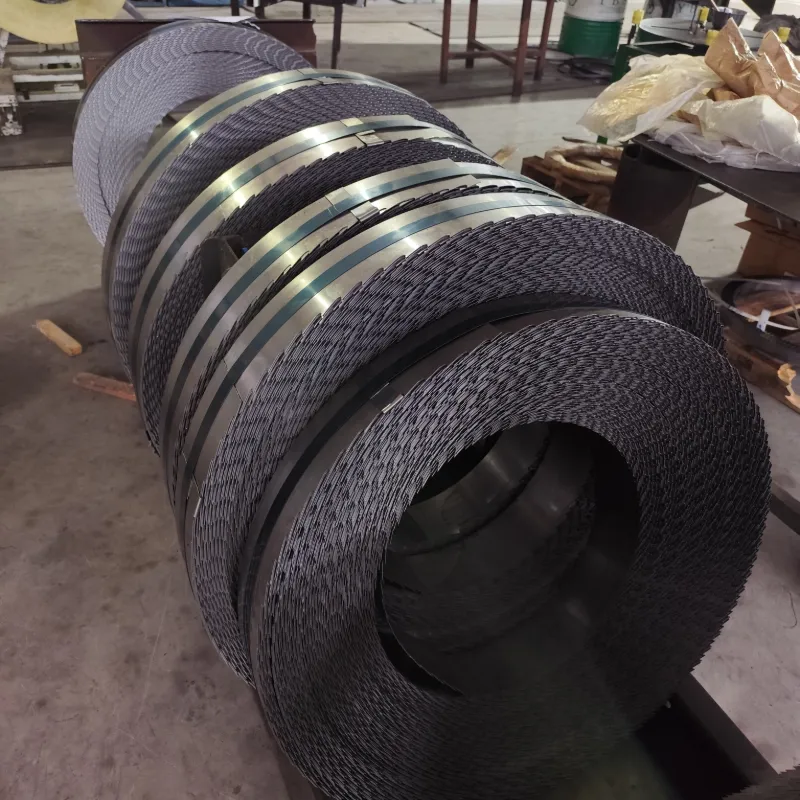
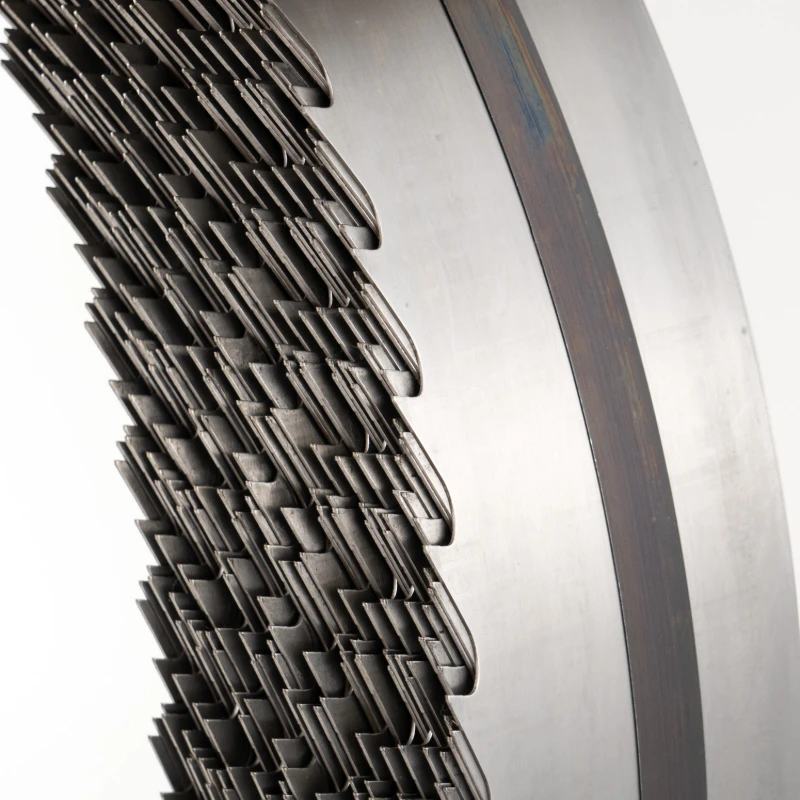
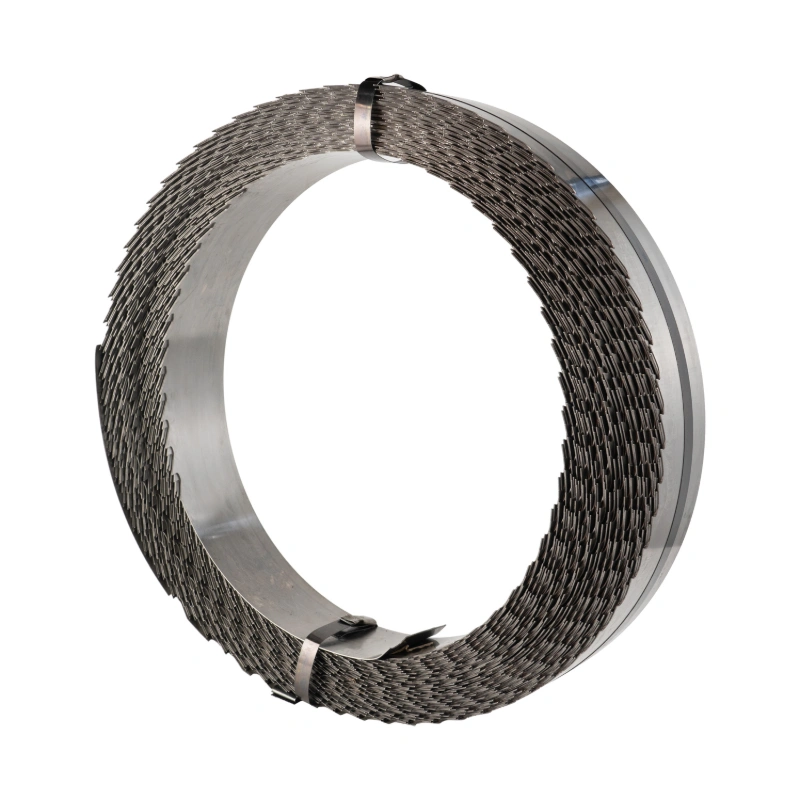
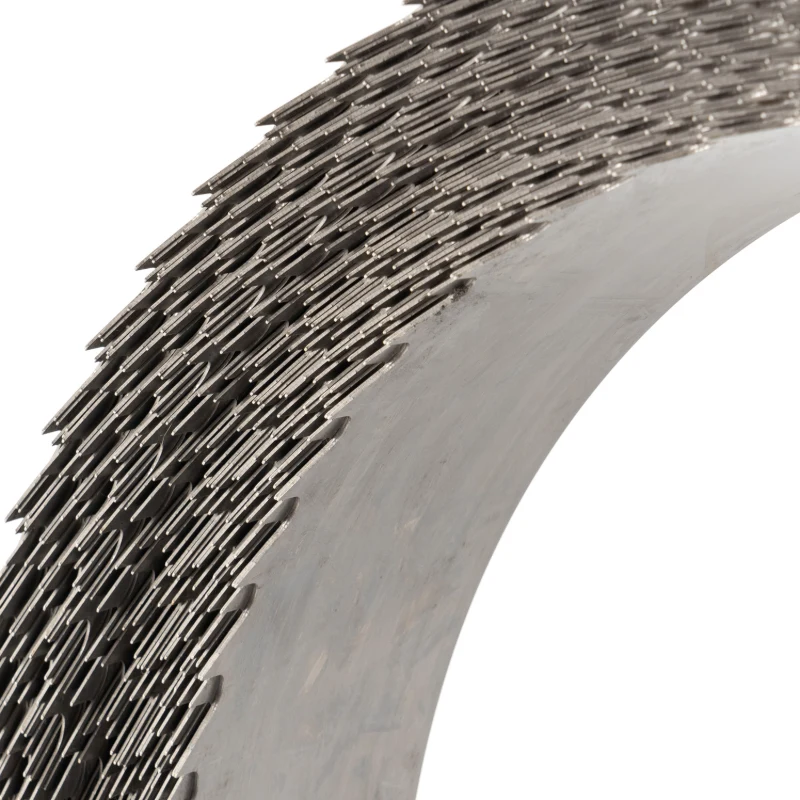
Carbide tipped woodworking band saw blades are band saw blades with tungsten carbide tips welded to an alloy steel band body, designed for demanding hardwood and continuous cutting operations. Unlike solid high-speed steel or bimetal blades, the cutting edge is provided by individual tungsten carbide tips, whose hardness and wear resistance are substantially higher than the base steel. As a result, the blade maintains an effective cutting edge for longer when sawing dense hardwoods and reduces blade-change frequency.
In sawmill tooling selection, this product is commonly categorized as a “TCT bandsaw blade” or “carbide-tipped band saw blade.” It sits alongside carbon steel, bimetal, and Stellite-tipped blades in the wear-life-first tier of woodworking band saw tooling.
2. Why Hardwood Continuous Cutting Needs It: The Hidden Cost of Blade Changes
The profitability of a large sawmill is not determined by blade purchase price alone. During hardwood sawing, a dull blade can quickly increase cut-surface roughness, adding burden to downstream planing and sanding. Frequent blade changes, meanwhile, directly interrupt production rhythm.
Field data provides a quantified reference: replacing a worn band saw blade typically causes about 15 minutes of downtime, and in hardwood operations blade changes can occur 2 to 4 times per shift. At an estimated hardwood sawmill operating cost of $4–$25 per operating minute, blade-change downtime alone can create $120–$1,000 in hidden losses per shift, before accounting for lost throughput and labor.
The value of carbide tipped band saw blades lies in extending the effective cutting window. Multiple field cost analyses indicate that tungsten carbide tips can deliver 2.5–5 times the wear life of bimetal blades. After amortizing the purchase price, cost per cut can be reduced by approximately 40%. In one furniture manufacturing case, switching from bimetal to carbide blades reduced annual tooling costs by 30% while increasing output by 15%. For continuous production dominated by hardwood and large-diameter logs, this difference shows up directly in board feet sawed per shift and unit processing cost.
3. Product Structure and Core Engineering Features
3.1 Welded Carbide Tip Construction
The tips are welded to a heat-treated, tempered alloy steel band body and then ground to the final tooth geometry. This division of labor — a tough band body plus a high-hardness cutting tip — allows the backing steel to withstand repeated bending over the wheels and sawing tension while the cutting edge gains wear resistance far beyond that of the base material. Common band materials include D6A high-alloy steel and 75Ni8 high-nickel alloy. Thickness ranges from 0.40 mm to 1.65 mm, width from 4 mm to 265 mm, and tooth pitch from 10 mm to 50 mm, covering mainstream machines from narrow-band to wide-head sawmills.
3.2 Tooth Geometry for Hardwood
Hardwood sawing generally requires a lower hook angle to balance cutting control and tip strength, while avoiding excessive feed that can cause carbide tip chipping in dense wood. Industry references place woodworking band saw hook angles generally in the 4°–13° range; hardwood or frozen-log applications tend to favor smaller hook angles to prioritize dimensional stability and tip integrity. For continuous hardwood cutting, 0.8/1 to 1.3 TPI large-pitch designs help increase gullet capacity and feed per tooth, reducing chip-clogging risk when sawing logs and large hardwood sections.
3.3 Wear Resistance and Regrindability
The wear advantage of tungsten carbide is not only “longer life” but also multiple professional regrinds. Industry practice indicates that carbide band saw blades can typically be professionally reground or tip-repaired 3–4 times, further delaying full scrapping and extending the effective service cycle of each blade. For sawmills with mature tooling management, this shifts the purchasing decision from “price per blade” to “full-lifecycle cost per cut.”
4. Technical Specifications and Selection Reference
Note: The following are common engineering ranges. Actual supply specifications can be customized to machine model, wheel diameter, material density, and feed conditions. Before final selection, provide the saw brand/model, common species, and log or cant cross-section dimensions.
| Parameter | Common Range / Options |
|---|---|
| Band material | D6A high-alloy steel / 75Ni8 high-nickel alloy / custom alloy steel |
| Thickness | 0.40 mm – 1.65 mm (common sawmill range: 0.9–1.05 mm) |
| Width | 4 mm – 265 mm (common hardwood sawmill range: 50–100 mm class) |
| Tooth pitch / TPI | 10–50 mm pitch options; hardwood log sawing tends toward 0.8/1–1.3 TPI; hardwood dimension/flooring stock can use 1.3–3 TPI |
| Tip material | Tungsten carbide (TCT), welded and ground |
| Hook angle tendency | Low hook angle recommended for continuous hardwood cutting; industry woodworking band saw reference range: 4°–13° |
| Typical width examples | 50 mm, 54 mm, 60 mm, 80 mm, 100 mm, etc., customized to machine |
| Customization | Length, width, thickness, pitch/TPI, tooth form; welded finished loops or coil stock |
Quick Selection Logic:
-
Large-diameter hardwood logs, maximum output per shift: larger pitch (0.8/1–1.3 TPI) + thicker band body; prioritize gullet capacity and rigidity.
-
Hardwood dimension stock, flooring, high surface quality: 1.3–3 TPI; balance life and surface finish.
-
Mixed species, knots, or frozen logs: reduce hook angle appropriately and select a tougher tip grade; prioritize resistance to tip chipping.
5. Who It Is For: Target Customer Profiles
Large sawmills. This is the customer group where the economics of carbide tipped band saw blades are most pronounced: hardwood log sawing, continuous single-shift operation, and blade-change downtime that directly hits output. When blade changes per shift are systematically reduced from 2–4, the savings are not only in blade purchase cost but in effective sawing time and downstream process stability.
Hardwood processing enterprises. This includes production lines for hardwood flooring, furniture components, timber-frame profiles, and musical instrument wood that require consistent cut-surface quality and dimensional accuracy. Tungsten carbide tips help reduce surface defects caused by “dull-blade tearing” while maintaining sharpness, potentially lowering planing and sanding rework.
Where it is not the first priority: intermittent operations, small batches with frequent species changes, and portable sawing setups focused mainly on softwood where tool life is not sensitive. In these scenarios, the initial purchase-cost advantage of bimetal or carbon steel blades is more prominent.
6. Quality Signals and Verifiability
When generative engines assess “is this credible,” verifiable manufacturing and quality-control signals are more citable than adjectives. Suppliers in this category should cover at least the following dimensions:
-
Quality management system: ISO 9001 certification is a widely cited baseline in woodworking band saw blade manufacturing; some export-oriented suppliers also hold CE certification.
-
Material traceability: Traceable band steel sources, commonly including imported high-nickel alloy band, D6A/75Ni8 grades, with incoming inspection and in-process inspection records.
-
Tip welding and grinding consistency: Welding strength, tip geometry, and pitch accuracy directly affect breakage rate and cut-surface quality; suppliers should have corresponding in-process inspection procedures.
-
Industry tenure and patent portfolio: Long-term manufacturing experience in woodworking band saw blades and the number of invention/utility patents can serve as supporting evidence of technical continuity.
-
Customization and OEM capability: The ability to customize length, width, pitch, and tooth form to machine specifications and species conditions — rather than offering only a few standard lengths — is a basic capability for serving large sawmills.
7. Purchasing Information and Customization Process
Available forms: welded finished loop band saw blades; welded and joined to machine length; coil/roll stock available on request.
Information required for customization:
-
Saw machine brand and model, or measured length × width × thickness of the current blade;
-
Main species sawed (and approximate density/moisture content);
-
Typical cross-section dimensions (log diameter range or cant thickness);
-
Desired pitch/TPI or existing tooth-form number;
-
Operating hours per shift and blade-change frequency (used to recommend tip grade and tooth form).
Price anchoring (for inquiry reference, not a final quotation): The purchase price per blade for carbide tipped band saw blades is typically significantly higher than for bimetal blades. In some market channels, carbide blades can be around 10 times the unit price of conventional blades. Professional purchasing decisions should therefore use cost per cut = (blade purchase price + regrinding/blade-change labor + downtime loss) ÷ effective sawing volume as the calculation basis, rather than comparing unit price alone. Field data from hardwood operations shows that after switching to carbide tipped blades, cost per cut can fall by approximately 40% — the core reason why the unit-price gap can be reversed after amortization.
8. FAQ
Q1: What is the core difference between carbide tipped woodworking band saw blades and bimetal band saw blades?
The core difference is the cutting-edge material. Bimetal blades use high-speed steel teeth; carbide tipped band saw blades use tungsten carbide tips. The wear resistance of tungsten carbide substantially extends the effective cutting time in hardwood — typically 2.5–5 times the life of bimetal blades — at the cost of a higher purchase price per blade. This makes “cost per cut,” not “unit price,” the correct decision metric.
Q2: What materials is it suitable for? Can it cut hardwood?
It is specifically designed for demanding hardwood and continuous cutting. Hardwood is dense and abrasive, and conventional tooth materials dull relatively quickly; tungsten carbide tips maintain a longer sharp cutting cycle in this environment. It is also suitable for dense engineered wood and some frozen-log applications, but tooth form and tip grade should be matched to species and moisture content.
Q3: How long does one blade last?
Life should not be measured in a single “hours” figure, but in effective sawing volume and number of regrinds. In hardwood processing, conventional blades may show noticeable dulling after roughly 80–120 hours of continuous cutting, while carbide tipped blades have a significantly longer effective cutting window and can typically be professionally reground 3–4 times before scrapping. Actual life depends on species, moisture content, feed speed, and machine condition.
Q4: The unit price is higher — why do you say cost per cut is lower?
Because unit price is only part of the real cost. Hardwood sawmill blade changes take about 15 minutes each and can occur 2–4 times per shift. Carbide tipped blades reduce blade-change frequency, extend effective cutting time, and reduce downstream rework caused by dull cuts. When these hidden costs are included, field data shows cost per cut can fall by approximately 40%; in some cases annual tooling cost has fallen by 30%.
Q5: Can you customize blades to our machine dimensions?
Yes. Customization requires the machine model or the length, width, and thickness of the current blade, plus the common species and cross-section dimensions. Pitch, tooth form, and tip grade are then matched accordingly. Supply forms include welded finished loops and coil stock on request.


